

Rice Guides • 6 min read
Best Rice for Biryani: Basmati, Sella or Extra Long?
Basmati rice is the classic choice for biryani, while sella basmati is better suited to cooks who prefer firmer, more separate grains during longer cooking. Extra-long rice refers to grain length rather than a separate rice variety.
Biryani rice affects aroma, grain separation, texture, appearance and the way the rice carries masala flavour. We recommend choosing biryani rice according to cooking method, grain firmness and the final texture required rather than relying only on pack wording.
Basmati, Sella and Extra-Long Rice
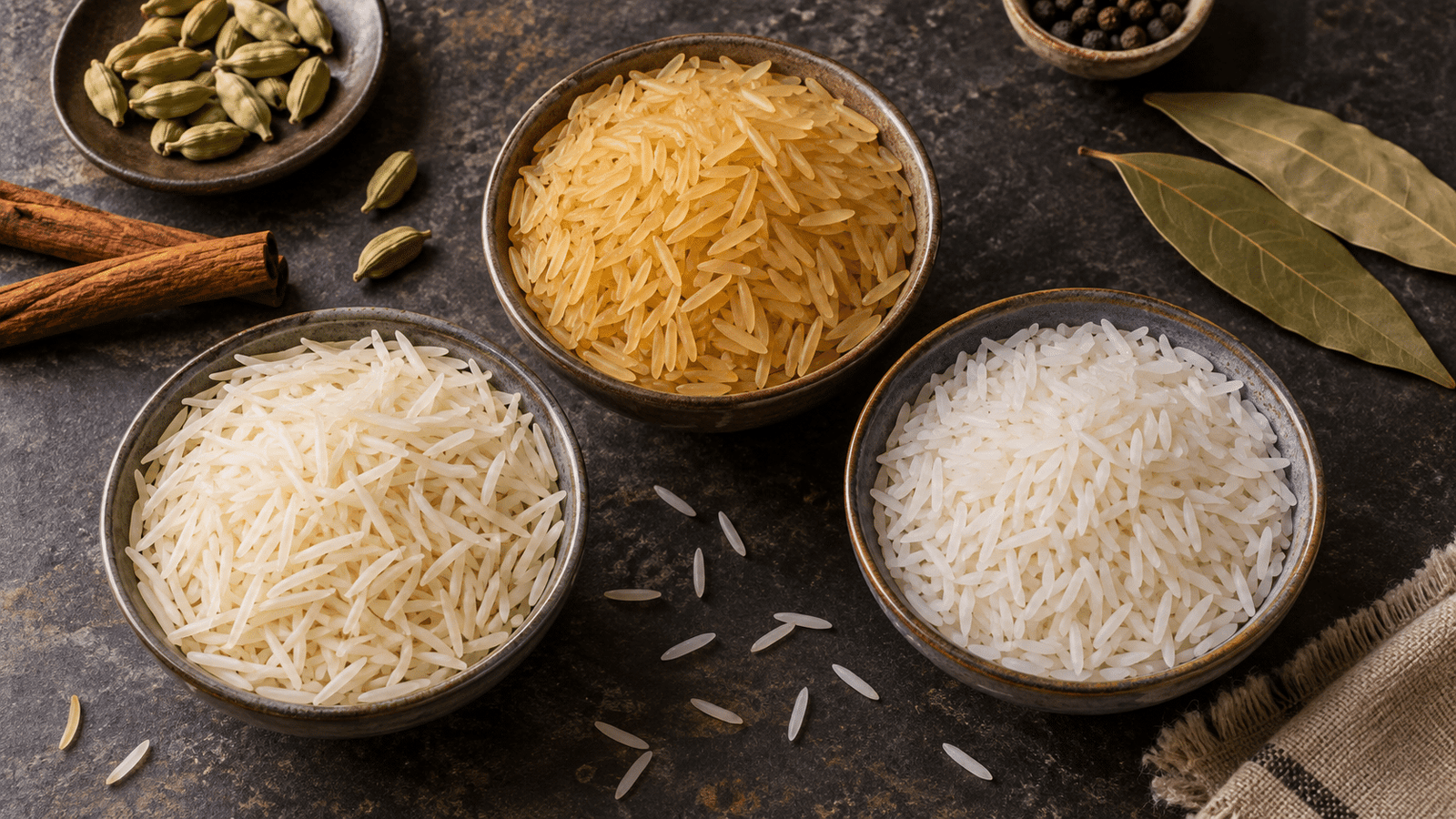
Basmati is an aromatic long-grain rice, sella describes a parboiling process, and extra-long describes grain length.
Basmati rice develops a fragrant aroma and elongated grain during cooking. Sella basmati undergoes parboiling before milling, creating a firmer grain structure. Extra-long basmati refers to basmati rice selected for greater grain length and expansion.
The main biryani rice terms are defined below:
- Basmati rice: aromatic long-grain rice commonly used for biryani, pulao and pilau.
- Sella basmati rice: parboiled basmati rice with a firmer cooked texture.
- Golden sella rice: sella rice with a golden appearance before cooking.
- Extra-long basmati rice: basmati selected for long grain size and strong visual presentation.
A single biryani rice product may therefore be both basmati and sella, or both basmati and extra-long.
Which Rice Is Best for Biryani?
Basmati rice is best for aromatic home-style biryani, while sella basmati is best for firmer grains and large-batch biryani.
Regular basmati rice gives biryani a light texture, noticeable aroma and long grains. Sella basmati keeps greater firmness during boiling, layering and dum cooking, making sella basmati suitable for larger biryani quantities.
Extra-long basmati improves grain appearance, although grain length alone does not determine biryani quality. Good biryani rice needs balanced aroma, grain strength, starch control, water absorption and cooking consistency.
The main characteristics of good biryani rice are given below:
- Long grain structure
- Separate cooked grains
- Pleasant basmati aroma
- Controlled starch release
- Firm texture
- Even water absorption
- Good grain expansion
- Ability to hold masala flavour
Biryani rice performs best when grain quality and cooking technique work together.
Basmati Rice for Biryani
Basmati rice gives biryani a fragrant aroma, light texture and distinct long grains.
Traditional biryani commonly uses basmati because basmati rice complements meat, spices, fried onions, herbs and masala without creating a heavy texture. Properly cooked basmati keeps individual grains visible and allows biryani layers to remain defined.
Basmati rice suits chicken biryani, lamb biryani, vegetable biryani, pulao and pilau. We recommend basmati where aroma and a softer finished grain are important. For a full dish idea, see our chicken biryani recipe.
Sella Rice for Biryani
Sella basmati gives biryani firmer grains that remain separate during extended cooking.
Parboiling strengthens sella rice before milling, producing a grain that tolerates boiling and dum cooking particularly well. Sella basmati therefore suits large pots of biryani, catering-style cooking and households that prefer a firmer rice texture.
Golden sella and white sella both belong to the wider sella rice category, although colour, processing and cooking characteristics vary by product. Our Greenland Basmati XXL 1121 Sella Rice is one option in the range.
Sella rice usually needs careful soaking and sufficient cooking time. Pack instructions remain important because different brands and grain grades absorb water differently.
Is Extra-Long Rice Better for Biryani?
Extra-long basmati improves the appearance of biryani, but grain length does not automatically make rice better for biryani.
Extra-long biryani rice creates attractive elongated grains after cooking. Grain strength, aroma, starch level, ageing, soaking and cooking method remain equally important.
A premium-looking biryani therefore depends on more than grain length. Proper grain separation and controlled cooking produce a better result than choosing rice only because a packet says “extra-long”.
How to Prepare Biryani Rice
Washing, soaking and partial boiling help biryani rice stay long, separate and firm during dum cooking.
Biryani rice preparation begins with gentle washing. Washing removes loose surface starch that contributes to sticky grains. Soaking supports even hydration and helps long basmati grains cook more consistently.
- Wash the basmati or sella rice gently until the water becomes clearer.
- Soak the biryani rice according to the product instructions.
- Boil the rice in sufficient water.
- Stop cooking while the grain still retains firmness.
- Drain the rice carefully.
- Layer the partially cooked rice with biryani masala.
- Complete cooking during dum.
Biryani rice continues cooking during the final steaming stage, so fully softened rice before layering often produces an overcooked final result.
Why Does Biryani Rice Become Sticky?
Biryani rice becomes sticky mainly through excess surface starch, excess water, overcooking or unnecessary stirring.
Sticky biryani rice loses grain separation and reduces the layered texture associated with well-prepared biryani.
- Insufficient washing
- Excess cooking water
- Excessive boiling time
- Frequent stirring
- Rough handling
- Overcooking before dum
- Leaving cooked rice in water
Proper washing and controlled cooking reduce starch-related stickiness and preserve long basmati grains.
Basmati or Sella for a Large Biryani?
Sella basmati is a practical choice for large biryani batches because the firmer grain tolerates extended handling and cooking better than softer rice.
Regular basmati remains suitable for family-size biryani where fragrance and a softer texture are preferred. Sella basmati becomes particularly useful when grain separation and consistency matter across a larger pot.
Our recommendation remains simple: choose basmati for aroma and delicacy, choose sella basmati for firmness and cooking tolerance, and choose extra-long basmati when presentation matters alongside good cooking performance.
Choosing Biryani Rice at Ambas Foods
Ambas Foods offers rice choices for biryani, pulao, pilau and everyday South Asian cooking, including basmati, sella and extra-long rice options.
We serve customers in Nelson who cook Pakistani, Indian and South Asian meals at home, so our rice range sits alongside biryani spices, lentils, flour, fresh vegetables and halal meat.
Choosing biryani rice becomes easier when the meal, cooking quantity and preferred texture are clear.
Quick Questions
Is basmati or sella better for biryani?
Basmati is better for fragrant, lighter biryani, while sella basmati is better for firmer grains and longer cooking.
Both rice types suit biryani when washing, soaking and cooking are controlled correctly.
Is extra-long rice good for biryani?
Extra-long basmati is excellent for biryani when long grain appearance and strong presentation are important.
Extra-long grain size works best alongside good aroma, grain strength and proper cooking.
Is sella rice the same as basmati rice?
Sella describes a processing method, while basmati describes the rice variety.
Many sella products are therefore sella basmati rice.
Why does biryani rice break?
Biryani rice breaks through excessive soaking, rough stirring, overcooking or handling softened grains too aggressively.
Gentle washing, controlled soaking and careful draining help preserve grain length.
Why does biryani rice become sticky?
Biryani rice becomes sticky when excess starch, water or cooking time causes the grains to bind together.
Proper rinsing and controlled boiling improve grain separation.
Does biryani rice need soaking?
Basmati and sella rice generally benefit from soaking because soaking supports even hydration and more consistent cooking.
Exact soaking time depends on the rice product and pack instructions.


 Home
Home  Whishlist
  Compare
  Checkout
  Account